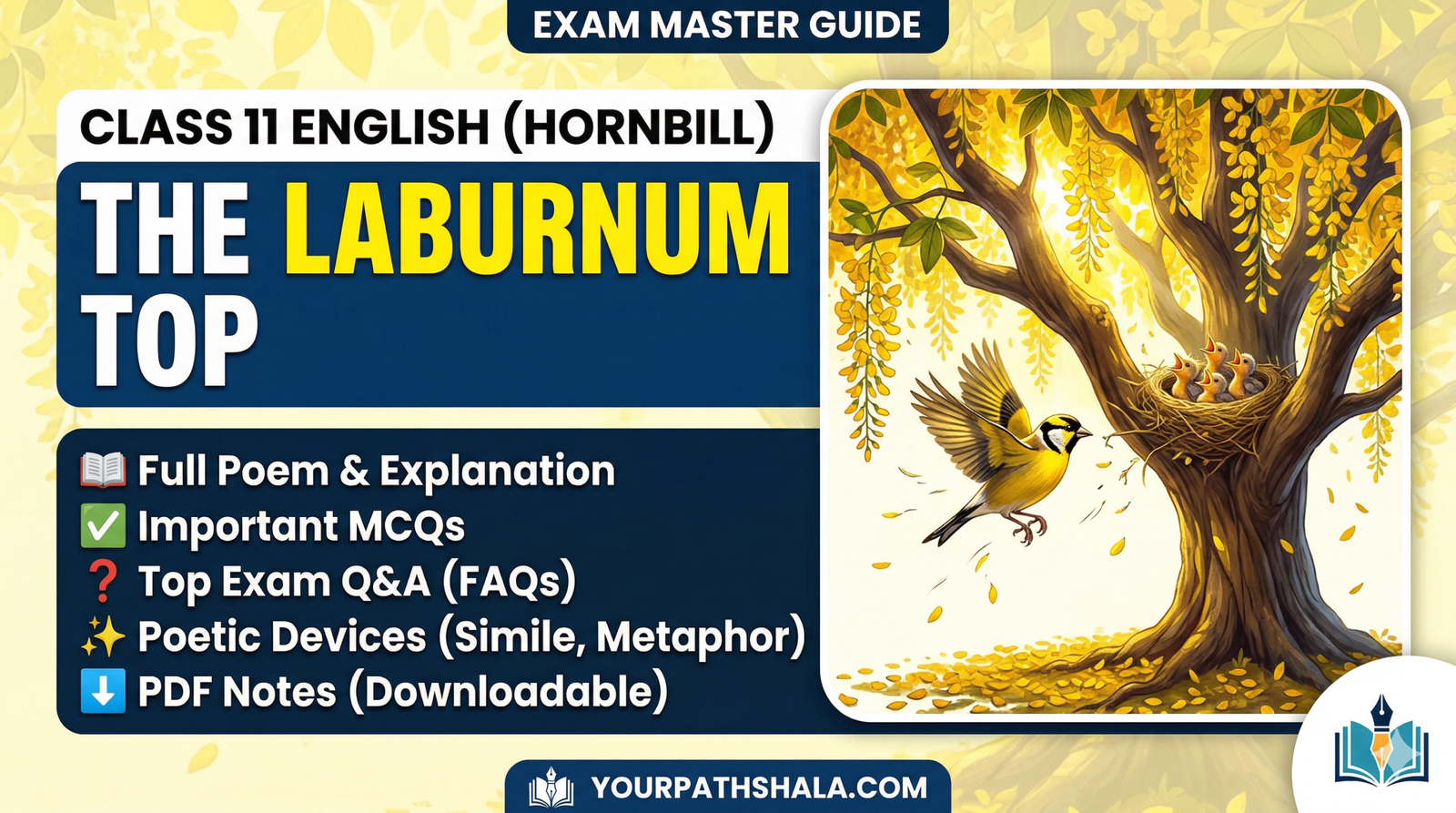
1. Poem Introduction
“The Laburnum Top” by Ted Hughes is a beautiful poem that revolves around the mutually beneficial relationship between a silent, dying Laburnum tree and a lively little bird named Goldfinch. The poem describes how the arrival of the bird brings life, energy, and joy to the otherwise quiet and still tree during the autumn season. When the bird flies away, the tree returns to its silent and empty state. It is a brilliant portrayal of the transforming power of life and energy.
2. The Poem
The Laburnum top is silent, quite still
In the afternoon yellow September sunlight,
A few leaves yellowing, all its seeds fallen.
Till the goldfinch comes, with a twitching chirrup
A suddenness, a startlement, at a branch end.
Then sleek as a lizard, and alert, and abrupt,
She enters the thickness, and a machine starts up
Of chitterings, and a tremor of wings, and trillings —
The whole tree trembles and thrills.
It is the engine of her family.
She stokes it full, then flirts out to a branch-end
Showing her barred face identity mask
Then with eerie delicate whistle-chirrup whisperings
She launches away, towards the infinite
And the laburnum subsides to empty.
– Ted Hughes
3. Word Meanings (Vocabulary)
- Laburnum: अमलतास का पेड़ (A short tree with hanging branches, yellow flowers, and poisonous seeds).
- Goldfinch: एक छोटी पीली चिड़िया (A small singing bird with yellow feathers on its wings).
- Twitching: फड़कना / अचानक हिलना (Short, sudden jerking movements).
- Chirrup: चिड़िया की चहचहाहट (A short, high-pitched sound made by a bird).
- Startlement: हैरानी / चौंकना (A feeling of sudden surprise or alarm).
- Sleek: चिकना / फुर्तीला (Smooth and glossy; quick movements like a lizard).
- Tremor: कंपन (A slight shake or trembling movement).
- Trillings: स्वर-लहरी (Repeated short high-pitched sounds).
- Stokes: ईंधन डालना (To add fuel to a fire; here, to feed the young ones to give them energy).
- Flirts out: झटके से बाहर आना (To move out suddenly or quickly to a branch end).
- Barred: धारियों वाला (Having stripes or bands of color).
- Eerie: डरावना / अजीब (Weird, mysterious, and slightly frightening).
- Subsides: शांत होना (Returns to a calmer, quieter, or empty state).
4. Key Elements & Characters
- The Laburnum Tree: Symbolizes silence, emptiness, and a death-like stillness in the autumn season. Its leaves are turning yellow, and seeds have fallen.
- The Goldfinch: Symbolizes life, action, energy, and vitality. Her arrival brings the dead-looking tree back to life.
- The Engine / Machine: Represents the nest full of baby birds. The mother bird acts as the fuel-provider, feeding them and starting up the “machine” of noise and excitement.
5. Full Summary
First Phase: The Silent and Still Tree
The poem begins with the description of a Laburnum tree standing in the quiet, yellow sunlight of a September afternoon. The top of the tree is completely silent and still. It is the autumn season, so a few of its leaves are turning yellow, and all its poisonous seeds have fallen to the ground. The tree appears almost lifeless and deeply quiet, perfectly matching the silent atmosphere of the autumn day.
Second Phase: The Arrival of the Goldfinch
The death-like silence of the tree is suddenly broken by the arrival of a Goldfinch. She lands at the end of a branch with a sudden “twitching chirrup” (a sharp sound). Her movements are described as sleek, alert, and abrupt, much like a lizard. As she enters the thick foliage of the tree to reach her nest, the entire tree comes alive. A “machine” of chattering, flapping wings, and high-pitched trillings starts up. The baby birds are excited to see their mother bringing food. The whole tree seems to tremble and thrill with this sudden burst of energy and life.
Third Phase: The Departure and Return to Silence
The poet calls the bird the “engine of her family.” She stokes this engine full by feeding her young ones until they are satisfied. After feeding them, she moves out to the end of a branch. Her face has dark stripes, which acts as her “identity mask” through the yellow leaves. Finally, making strange, delicate, and eerie whistling sounds, she flies away into the infinite sky. As soon as she leaves, the tree once again subsides into its original state of silent emptiness.
6. Multiple Choice Questions (10 MCQs)
Q1. Who is the poet of “The Laburnum Top”?
(a) Shirley Toulson | (b) Ted Hughes | (c) Markus Natten | (d) Walt Whitman
Answer: (b) Ted Hughes
Q2. Which month is mentioned in the poem?
(a) October | (b) August | (c) September | (d) November
Answer: (c) September
Q3. What is the condition of the Laburnum tree in the beginning?
(a) Full of green leaves | (b) Silent and death-like | (c) Noisy and active | (d) Covered in snow
Answer: (b) Silent and death-like
Q4. What bird comes to the Laburnum tree?
(a) A Sparrow | (b) A Crow | (c) A Goldfinch | (d) A Pigeon
Answer: (c) A Goldfinch
Q5. The bird’s movement is compared to which animal?
(a) Snake | (b) Lizard | (c) Mouse | (d) Cat
Answer: (b) Lizard
Q6. What does the word “machine” refer to in the poem?
(a) A car engine | (b) The nest with noisy chicks | (c) The tree itself | (d) The wind
Answer: (b) The nest with noisy chicks
Q7. What does the bird do to the ‘engine of her family’?
(a) Breaks it | (b) Abandons it | (c) Stokes it full | (d) Hides it
Answer: (c) Stokes it full
Q8. What acts as the bird’s “identity mask”?
(a) Her yellow wings | (b) Her barred face | (c) Her long tail | (d) Her sharp beak
Answer: (b) Her barred face
Q9. Where does the bird fly away to at the end?
(a) Another tree | (b) The infinite (sky) | (c) The ground | (d) The river
Answer: (b) The infinite (sky)
Q10. What happens to the tree after the bird leaves?
(a) It grows new leaves | (b) It falls down | (c) It subsides to empty and silent | (d) It keeps shaking
Answer: (c) It subsides to empty and silent
7. Short Answer Questions (30-40 Words)
Q1. How does the poet describe the Laburnum tree in the beginning?
Ans. The poet describes the Laburnum tree as silent, quiet, and completely still in the yellow September sunlight. Its leaves are turning yellow, and all its seeds have fallen, giving it a lifeless and death-like appearance.
Q2. Why is the goldfinch compared to a lizard?
Ans. The goldfinch is compared to a lizard because her movements are incredibly sleek, smooth, alert, and abrupt. Just like a lizard moves swiftly and cautiously to avoid danger, the bird enters the thick tree branches quickly and carefully.
Q3. What is the “machine” that starts up, and how?
Ans. The “machine” refers to the nest full of baby birds. When the mother goldfinch arrives with food, the chicks get excited and start making noise, chittering, and flapping their wings, creating a commotion that sounds like a machine starting up.
Q4. What does the phrase “her barred face identity mask” mean?
Ans. The goldfinch is yellow, so her body hides easily among the yellowing leaves of the Laburnum tree. However, she has dark stripes (bars) on her face. This striped face reveals her presence and acts as an identity mask, making her recognizable.
Q5. What happens to the Laburnum tree after the goldfinch flies away?
Ans. After the goldfinch launches herself into the infinite sky, the tree once again becomes totally silent and still. It “subsides to empty,” returning to its original death-like, quiet state without the energy of the bird.
8. Long Answer Questions (60-70 Words)
Q1. Discuss the theme of the poem ‘The Laburnum Top’.
Ans. The central theme of the poem is the transforming power of life, energy, and the mutually beneficial relationship in nature. The Laburnum tree represents silence and lifelessness, while the goldfinch represents vitality and action. When the bird arrives, she brings the dead-looking tree to life with noise and movement. The poem beautifully illustrates how the presence of life and love can transform dullness into a thrilling experience.
Q2. How is the tree transformed during the bird’s visit? Describe the change.
Ans. Before the bird’s arrival, the tree is dead silent, still, and yellowing in the autumn sun. As soon as the goldfinch enters its thickness, the tree is suddenly transformed. A “machine starts up” as her young chicks begin to chatter, whistle, and flap their wings in excitement for food. The entire tree “trembles and thrills” with life and energy, breaking the autumn silence completely.
Q3. Explain the line: “It is the engine of her family. She stokes it full.”
Ans. The “engine” refers to the nest with baby birds, and the goldfinch is the fuel-provider. Just as an engine needs coal or fuel to run and create energy, the baby birds need food. The mother bird feeds (“stokes”) her chicks until they are full. This nourishment gives them energy, causing them to make lively noises and flutter their wings, thus keeping the “engine” of her family running.
Q4. Contrast the beginning and the end of the poem.
Ans. The poem begins and ends on the same note of silence and emptiness, creating a cyclical structure. In the beginning, the Laburnum tree stands quietly with yellowing leaves, appearing lifeless in the September sunlight. The middle of the poem bursts with the energetic noise of the bird and her chicks. However, once the bird flies away into the infinite sky, the tree immediately “subsides to empty,” returning to its initial death-like stillness.